
Goby Homes is a people-centered platform for agents and brokerages to better manage the people and processes that drive business.
Real estate is changing fast, and so must you. Inman Connect San Diego is where you turn uncertainty into strategy — with real talk, real tools and the connections that matter. If you’re serious about staying ahead of the game, this is where you need to be. Register now!
Goby Homes is transaction experience software for real estate.
Platforms:Web; iOS; Android
Ideal for: All agents, brokerages and their clients
Top selling points:
- Simple, intuitive user experience
- In-app messaging
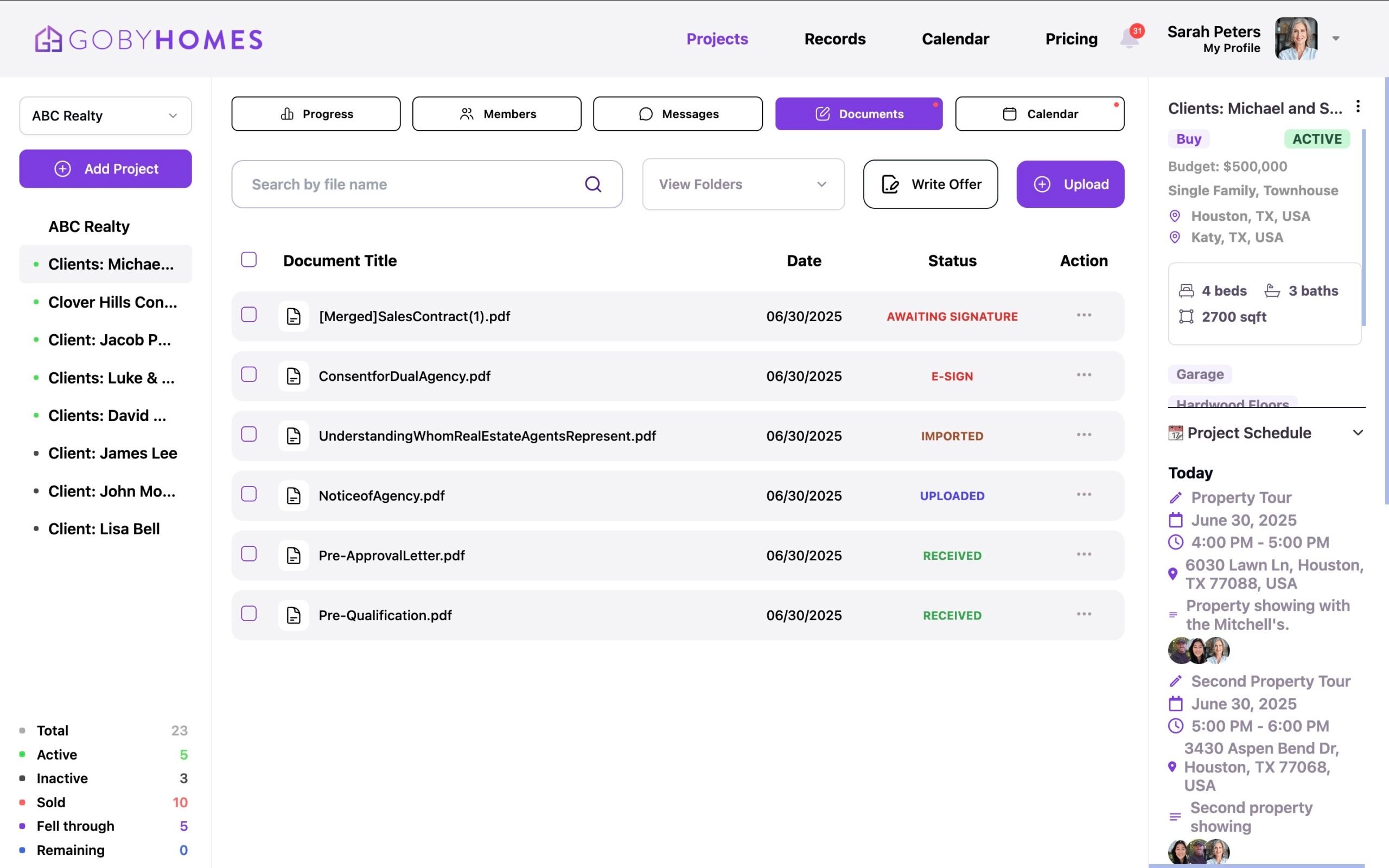
- Flexible document creation with e-sign
- Included, quick offer creation
- Consumer-experienced driven
Top concern(s):
Where it goes from here. Market rollouts for (relatively) new companies tend to come with fast, direct feedback. Some of it is good, some not so much. I want to see what the founder does with the insights and critiques new and existing customers offer as more case studies of its success emerge.
What you should know
Goby Homes is a collaborative, “we’ve-already-thought-of-that” type of transaction solution that exhibits respect for buyers and sellers and a clear understanding of how real estate agents work.
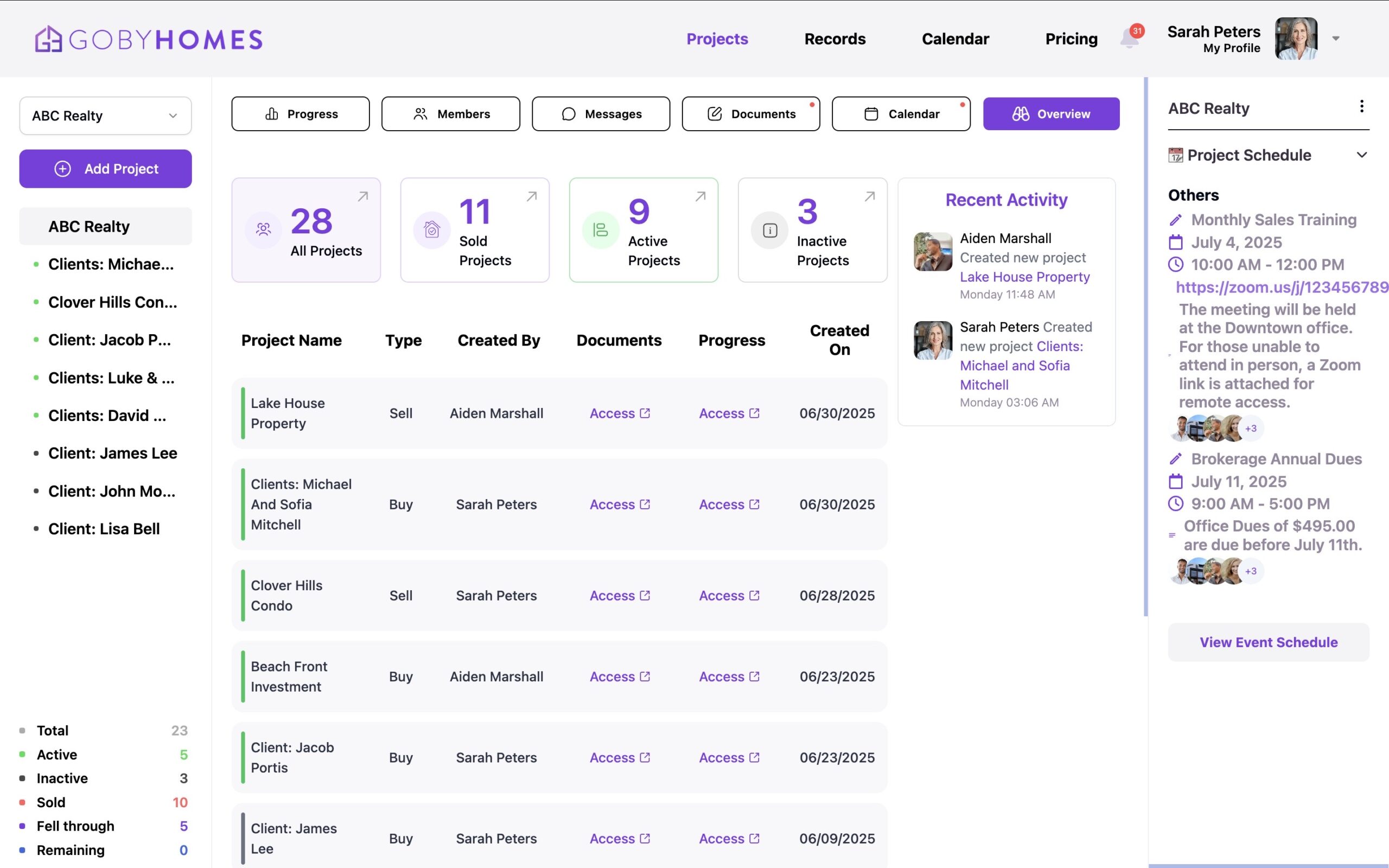
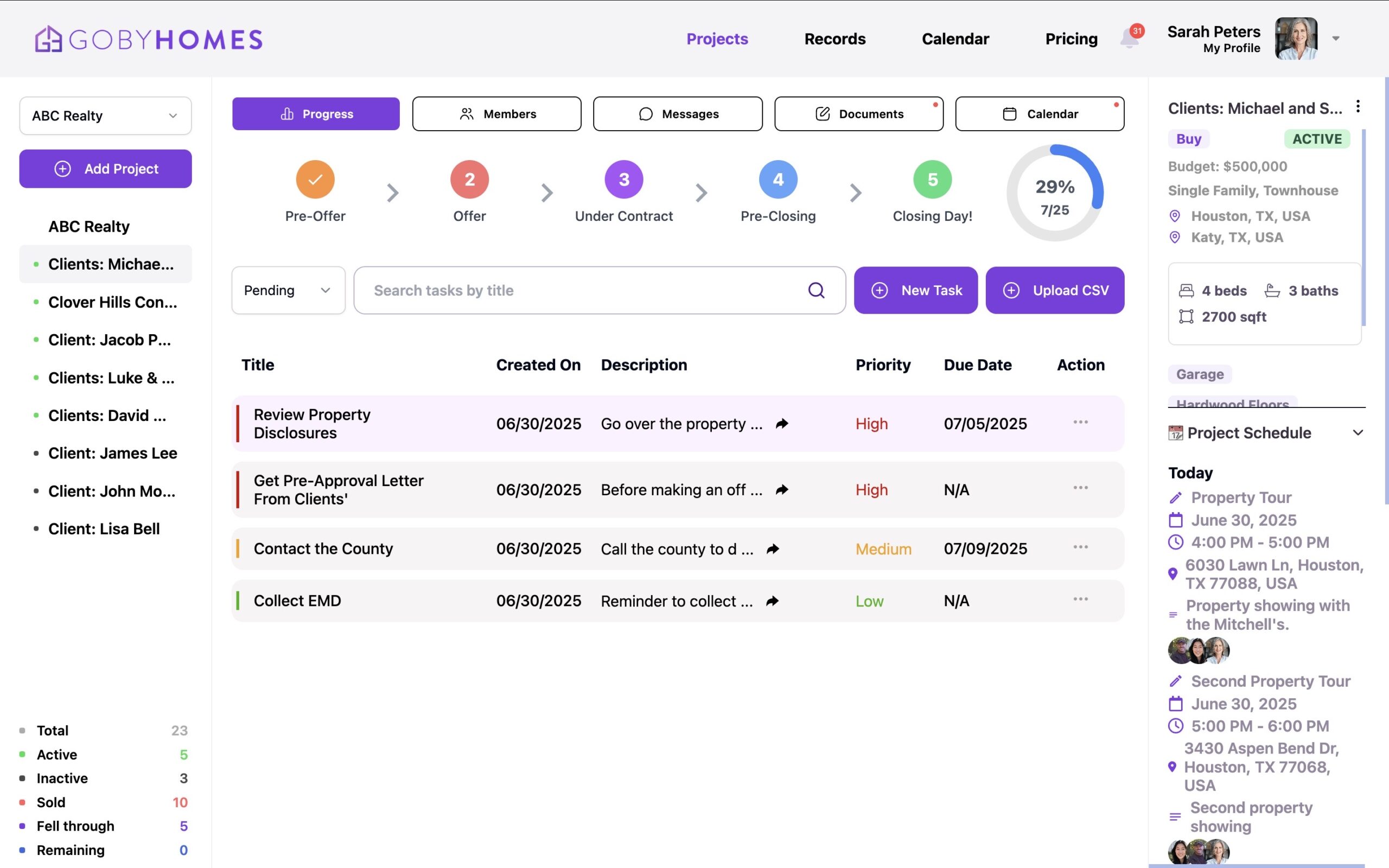
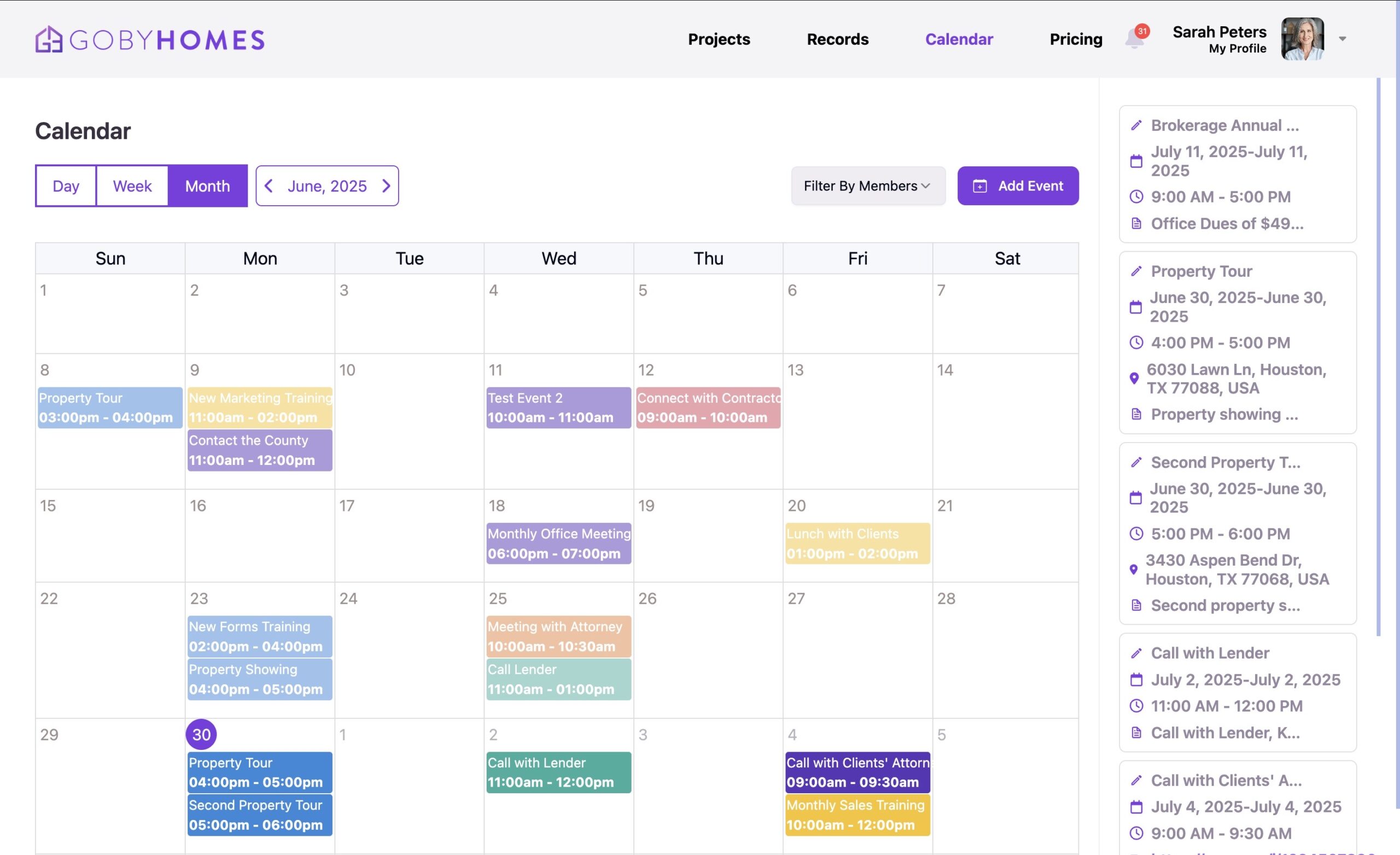
It uses in-app messaging with document creation, sharing, customization and digital signing, deal progress tracking, task lists and project member permissions to coordinate who has to do what, sign where and respond to whom.
Members — buyers, sellers, other agents — are invited into a “Project,” or transaction, and tasked only with what their stake in the deal dictates. The software deploys alert automation, document error detection, broker or team lead review and extensive digital record keeping, whether rather home closes or not.
Its features are designed to keep people, documents and dates in lockstep. It calls every new deal a “project,” and from there, each thread of communication, related party, task and document becomes aligned. The front-end uses a broad color scheme to differentiate between deal stages and task priority, which are listed accordingly under each, such as Pre-Offer, Offer, Under Contract and so on. It’s all quite clear where things stand, and if something is vague, you can quickly search the deal-specific, “Slack-like” messaging feature and documents modules to find clarity.
The offer creator pulls in data from Project summary and allows the user to enter price and terms and then send it as a PDF with dynamic fields for initials and signatures. Big documents can be viewed page by page, and addenda can be added by anyone with such permissions, usually the broker. Every executed document triggers alerts to respective parties, and the deal continues on its path to closing.
Records are summarized and collated upon close — or cancellation — in a searchable compendium, in which previous transactions can be added manually when needed, too.
Goby Homes is yet another entry in a series of consumer-centric experience solutions that have started to remember to include the actual people whose time, money, homes and sanity are put at risk upon the onset of a real estate deal.
Thanks to applications like Goby Homes, ListedKit, Mosaik and others, real estate agents have a better way to manage deals than sending PDF offers back and forth via email, manually inserting changes, texting/emailing/calling clients, forwarding to brokers and other parties, entering calendar milestones … on and on, and only occasionally updating the consumer with something like, “Emailed revised contract this morning, should hear back before EOD.”
Every time a deal point gets pushed and pulled around the transaction ecosystem via disparate third-party tool, the more critical business information becomes disconnected from the people financially and emotionally at the center of it.
Goby Homes wants information to move to the people who need it, and then help them act on it, whether buyer agent, listing agent or leasing agent.
I’m pretty bullish on this product because it’s early in the game. It’s only now rolling out, but it looks and approaches the business of real estate with a more tenured outlook on what agents and consumers need to feel confident that it’ll all go as smoothly as it can.
I’d like to see how Goby Homes approaches partnerships and integrations, both from whom it chooses to work with and whom it tells no.
I hope it avoids climbing back up toward the front of the transaction to burden the experience with marketing information or market data, or by populating a Project with “others who looked at this house” when a transaction falls through.
The software’s founder, Terrence Nickelson, cited the high volume of canceled home sales as an impetus for creating it. That’s a terrific mission. I don’t want to see Goby Homes devolve into a business generation solution, however. It’s better as a productivity driver. How he responds to customer wants and needs will be telling. Will he bolt on accounting or back-office tools? Time will tell.
For now, though, Goby Homes offers a number of reasons for brokers and technology directors saddled with disjointed deal management stacks to be optimistic that the industry’s innovators are listening.
Nickelson is himself an agent. But I doubt he’ll be able to juggle both roles much longer.
Have a technology product you would like to discuss? Email Craig Rowe
Craig C. Rowe started in commercial real estate at the dawn of the dot-com boom, helping an array of commercial real estate companies fortify their online presence and analyze internal software decisions. He now helps agents with technology decisions and marketing through reviewing software and tech for Inman.